- Home
- List of Herbs
- Black Tea Benefits
What is Black Tea | How It's Made | Black Tea Types | About Caffeine | Black Tea Benefits | Historical Use | How to Brew | Oxalates | Fluoride | Precautions | Shop
Black Tea Benefits, 9 Things About | Pros and Cons
1) What is Black Tea?
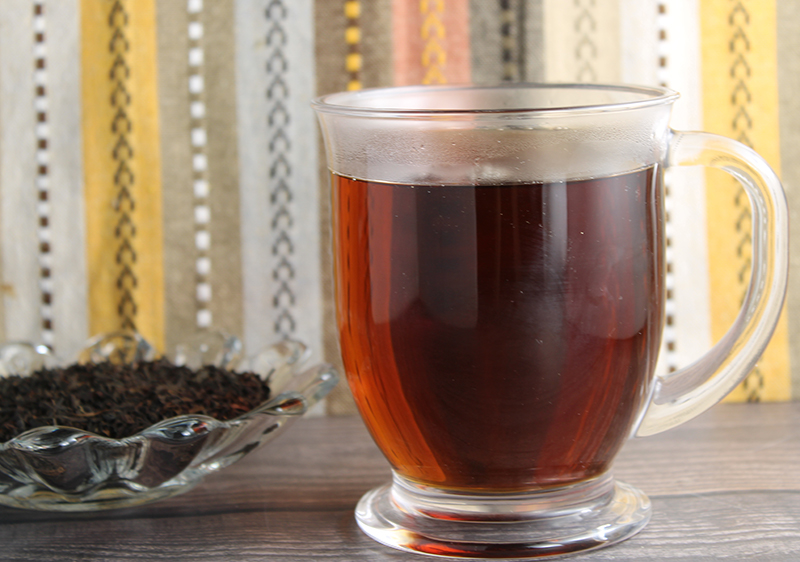
Black tea comes from the thick leaves of a small shrub related to the flowering ornamental known as the Camellia.
The main one used in tea production is the Camellia sinensis species native to China.
This is the same variety, often called "the tea plant" used to make other types like green tea, white tea and oolong.
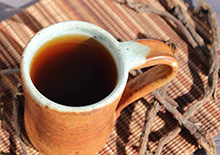
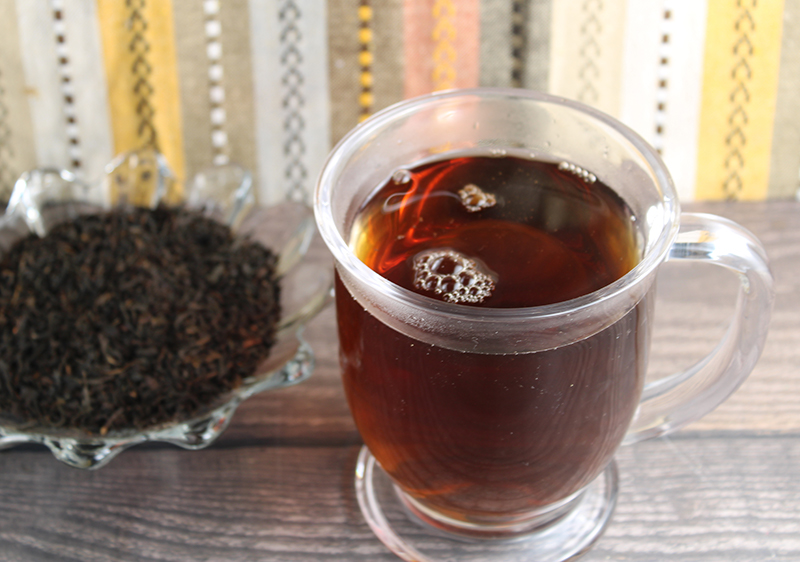
Black tea is called "black" because the green leaves turn dark after processing. However, when dried black tea leaves are infused, they turn the tea liquid a reddish-brown color. This is the reason it's often referred to as "red tea" or hong cha in Chinese culture.

2) How Black Tea is Made
Table of Contents
What is Black Tea | How It's Made | Black Tea Types | About Caffeine | Black Tea Benefits | Historical Use | How to Brew | Oxalates | Fluoride | Precautions | Shop
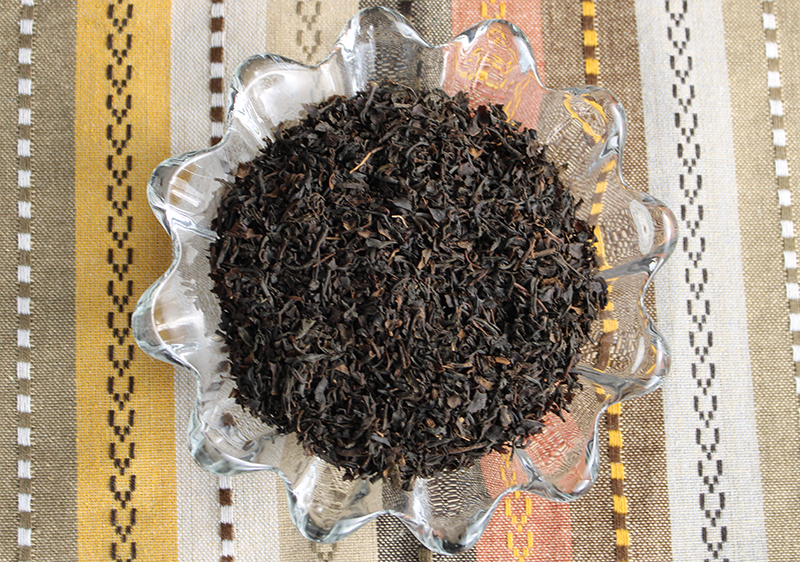
Black tea leaves are originally green when harvested but darken from exposure to air and enzymatic reactions, turning them a black-brown color.
The main processing methods used to make black tea include withering, rolling or tearing, oxidation (also known as fermentation) and drying.
The two main techniques for rolling or tearing are the Orthodox and CTC (Crush-Tear-Curl). The Orthodox is a traditional way (hence the name) of gently rolling the leaves and is the most common in loose-leaf varieties. It is known to preserve integrity, health components and flavor complexity.
The CTC method is by far the most popular for large-scale production in the worldwide tea industry due to efficiency and reduced cost. It utilizes machinery whereby the leaves are put through rollers with sharp teeth to crush, tear, and curl the leaves into smaller-size pellets.
Most commercial dried black tea found in tea bags is typically made from this technique. It has a shorter infusion time and is known for its consistently strong flavor.
3) Common Black Tea Types and Flavor Profiles
When it comes to black tea manufacturing, there are many Camellia sinensis cultivars which provide a range of distinct features.
They are often named after their place of origin and region produced.
The top most common types include Assam, Darjeeling, Ceylon, Keemun, Lapsang and Kenyan.
Black Tea Flavor Profiles:
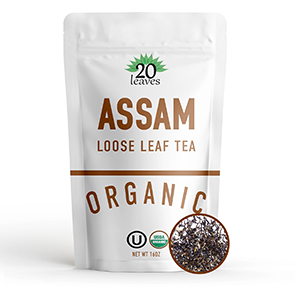
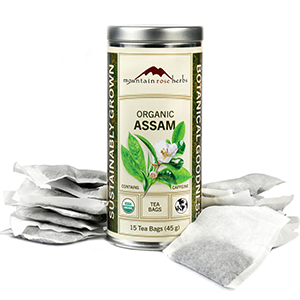
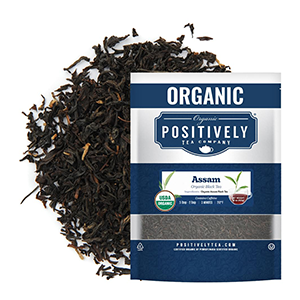
ASSAM - malty and robust
DARJEELING - floral and muscatel
CEYLON - bright, malty and citrusy
KEEMUN - mellow, smoky and smooth
LAPSANG - smoky, piney and woodsy
KENYAN - malty, floral and citrusy
Each has their own unique flavor profile with descriptions like malty, bold and smoky to light, fruity and floral.
There are also tea blends like English breakfast, which is usually a combination of Assam, Ceylon and Kenyan varieties.
Others like Earl Grey (a blend of Keemun, Assam and Ceylon) or Masala Chai (a blend of Assam and Darjeeling) also include herbal or spice components.
There is a distinct tea grading system to establish quality which we will not get into on this page.

4) About Caffeine Content
Generally, it is often reported that an 8-ounce cup of black tea usually contains 40-70 milligrams of CAFFEINE content.
Specific factors will influence this amount such as cultivar type, how it is processed, leaf size, brewing temperature and infusion time.
Assam and Ceylon varieties are usually viewed to have a higher ratio of caffeine than others.
Compared to the average caffeine content in green tea and coffee, black tea is usually somewhere in the middle.
Caffeine Content:
Green Tea - 30-50 mg/8-ounce
Black Tea - 40-70 mg/8-ounce
Coffee - 90-95 mg/8-ounce
Caffeine, as most people know, can help to promote energy and improve mental alertness. Black tea also makes a great coffee and energy drink replacement if you’re looking to reduce caffeine consumption.
While we don't promote the overuse of caffeinated substances, including the list of teas such as matcha, yerba mate and green tea, when used in moderation these tea types can work in sync with healthy lifestyle practices that naturally energize the body and support long-term wellness.
5) Black Tea Benefits
Some of the researched benefits of black tea come from its antioxidant components known as POLYPHENOLS, mainly theaflavins, thearubigins, catechins and other flavonoids.
These are some of the main compounds that give black tea its anti-inflammatory properties and support to circulation, cardiovascular health and cognitive functions.
Drinking black tea is likewise often suggested good for glucose metabolism and its antimicrobial activity is reported to be useful for maintaining a healthy gut microbiome.
One of black tea's benefits over green tea is that the fermentation methods remove tannins from the leaves. This is why green tea can cause stomach upset for some individuals.
Compared to green tea, black tea however does contain less of the catechins known as epigallocatechin gallate (EGCG) and L-theanine content due to the oxidation process but levels are still significant.
On average, black tea has about 936mg EGCG/100g while green tea has about 7380mg EGCG/100g.
Most of the EGCG in black tea gets converted into THEAFLAVINS and THEARUGINS with processing.
We recommend organic whole loose leaf black tea's if you’re looking for all the maximum health advantages that black tea has to offer.
6) Historical Popularity of Black Tea
Black tea has been historically versatile across many different cultures, especially in India and the United Kingdom.
Drinking a cup of black tea throughout the day is considered a part of British identity and custom.
In India and Sri Lanka, where the tea plant is widely grown, black tea is also very popular, particularly when spiced to make masala chai.
While green tea is by far the most common in Southeast Asia, parts of the Middle East have a long-time tradition of consuming black tea as a daily ritual.
7) How to Brew Black Tea
The traditional way to brew black tea is to pour 8 ounces of boiling hot water at 212°F (100°C) over one teaspoon of loose leaf black tea.
Let the infusion steep for 5 minutes, then strain out the leaves.
In British custom, this process is done in larger quantities in a warmed tea pot using either tea bags or loose leaf tea.
8) Black Tea and Oxalates
Black tea is on the list of foods that contain OXALATES. These are considered "antinutrients" that can cause potential health issues for some individuals when consumed in excess.
Problems can occur when oxalates bind to minerals, especially calcium, causing toxic accumulation which can increase risk for kidney stones. Some speculate that they are also a main culprit behind many autoimmune, digestive and inflammatory conditions.
Oxalates are only found in plant-based foods, so vegans and vegetarians are often cautioned against dietary over-consumption.
Foods or drinks over 50 milligrams per serving are considered high and not recommended for those on a low oxalate diet.
The oxalates in black tea can really only become an issue if you happen to drink many cups a day along with a daily intake of other high oxalate foods.
After brewing time, one teabag of black tea can contain about 20 milligrams of oxalate content. One teaspoon of loose leaf can be about 55 milligrams.
9) Black Tea and Fluoride
Black tea can contain fluoride content at higher than normal levels compared to other teas because many types are made from older leaves. (*)
Fluoride can cause neurotoxicity at high dietary intake and is associated with causing lower IQ, thyroid disorders and bone weakness.
If this is a concern, you may opt for brands that test for fluoride levels. Otherwise, teas made from younger leaves like white tea or matcha are known to have significantly lower levels.
Precautions:
Black tea contains caffeine and may trigger unwanted side effects such as insomnia or headaches. It's best to avoid consuming it if you are pregnant or nursing. Seek the advice of your nutritionist or healthcare provider before drinking black tea if you have a serious medical condition or are taking any medications.

Shop Related Products (About Affiliates & Amazon Associate Paid Links)
Affiliate Disclaimer: This section contains affiliate product links. If you make a purchase through our recommended links, we receive a small commission at no additional cost to you. Thanks for the support.