- Home
- Top Superfoods
- Health Benefits of Moringa Seed
Health Benefits of Moringa Seed, Top 3 Reasons to Eat One
Intro | Immune Tonic | Cholesterol Management | How to Eat | Supports Detox | Purchasing | Plant Your Own | Precautions | Shop
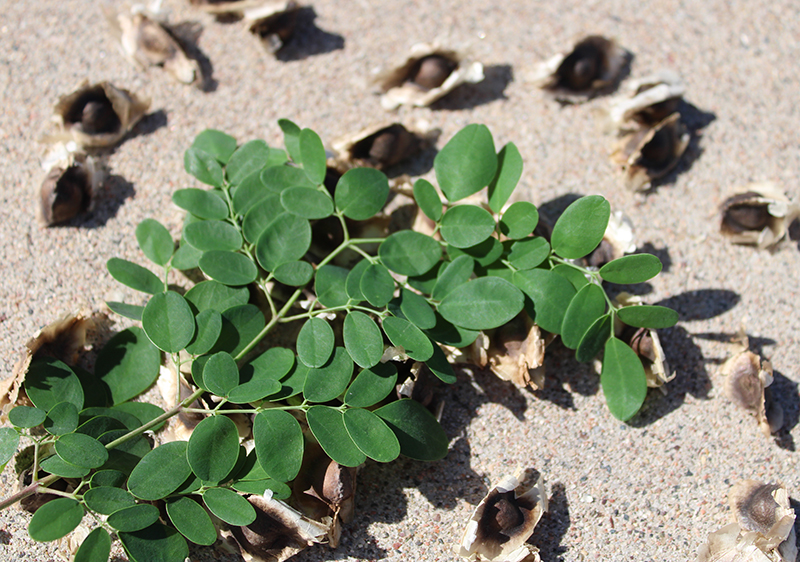
Usually, when people discuss moringa, they are talking about the tree species utilized for its nutritious green leaves, which are commonly dried and turned into moringa powder.
Considered a top 10 superfood for many years, it is frequently added to drinks as a highly nourishing dietary food supplement, especially in non-native habitats.
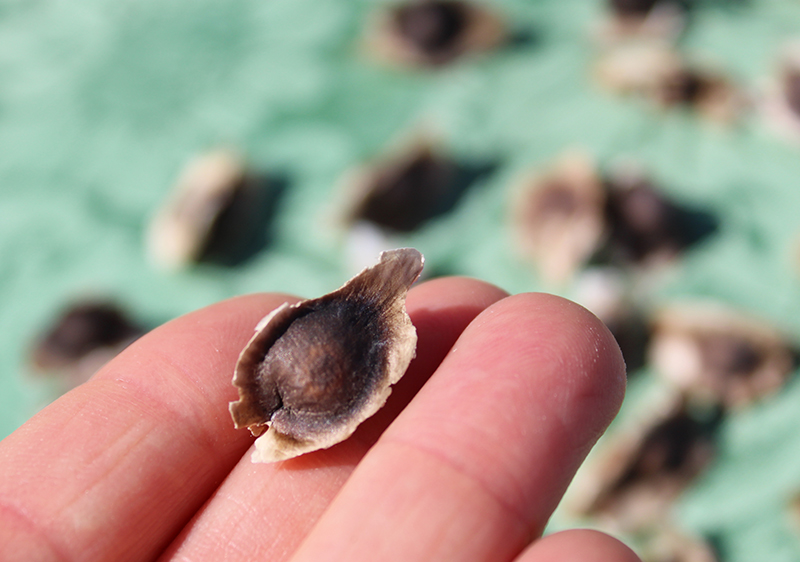
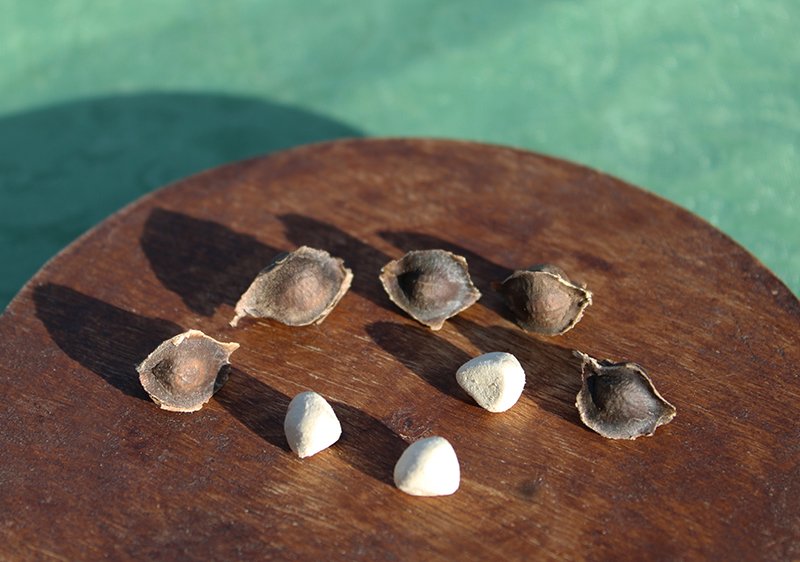
But did you know you can also eat the seed of the mighty Moringa oleifera? Also called "drumstick tree" because it produces long bean-shaped fruit pods containing up to 20 triangular seeds. These seeds have a shell and papery "wings" to help with wind dispersal.
And yes, when the shell is removed, the white inner kernels are indeed edible when the pods mature and turn brown.

Table of Contents
Intro | Immune Tonic | Cholesterol Management | How to Eat | Supports Detox | Purchasing | Plant Your Own | Precautions | Shop
To us, these little rounded pearls taste a bit like sunflower seeds. However, their nutritive compounds give them a slightly bitter but sweet aftertaste.
While they are gaining more recognition for their therapeutic value in the world of modern-day superfoods, in many different cultures of the tropics, where moringa prolifically grows, the moringa seed is a respected asset in traditional folk herbalism..
For example, in regions of India, Africa and the Philippines, eating just one seed a day is believed to offer great nutraceutical properties.
These are our top 3 favorite health benefits of moringa seed and why you might enjoy periodic use.
Health Benefit #1 - Immune Tonic
Although the moringa seed is small, it holds quite an impressive array of potent bioactive compounds that help to support immune defenses. (*)
Firstly, it is a condensed source of ANTIOXIDANTS, including phenolic acids, flavonoids, sterols, and tocopherols. These include gallic acid, ferulic acid, caffeic acid, chlorogenic acid, myricetin, quercetin, β-sitosterol, stigmasterol and vitamin E.
Another secondary metabolite found in all species of moringa is GLUCOMORINGIN, a glucosinolate that, when chewed and broken down by the enzyme myrosinase, converts to the biologically active compound called MORINGIN.
Glucomoringin content is especially concentrated in the seed and its moringin dervative possess potent attributes as an antioxidant and anti-inflammatory agent. (*)
Interestingly, like many Chinese tonic herbs, some of moringa seed's constituents come from TRITERPENES, especially oleanolic acid and ursolic acid, as well as POLYSACCHARIDES. Both of these components contribute greatly to its immunomodulatory influence.
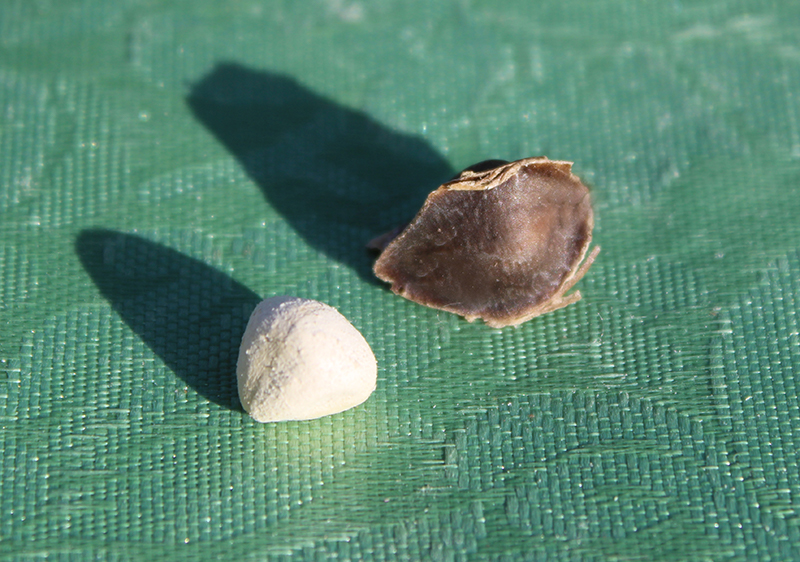
These compounds are revealed when you first begin chewing on the seed, as it has a very tonic-like flavor.
One of the main polysaccharides in moringa seed is ARABINOGALACTAN, which provides dietary fiber as well as immune support.
Arabinogalactan breaks down into arabinose and galactose sugars, which also accounts for the sweet aftertaste.
In recent 2025 research on Moringa oleifera seeds, moringa's polysaccharides were shown to enhance antiviral immune responses and helped increase beneficial gut bacteria in mice tested.
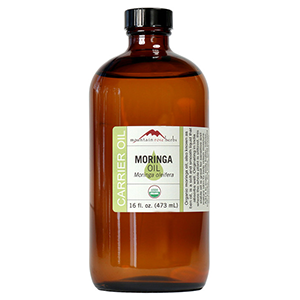
Moringa seeds do contain some protein and are highest in vitamins and minerals like vitamin C, B vitamins, magnesium, calcium and potassium. They are also a source of lipids and commonly extracted to make moringa seed oil, often utilized in skin and hair products.

How to Eat Moringa Seed
Moringa seed is one to be consumed in moderation for periodic use, not on an ongoing basis.
For adults, it is recommended that daily intake should not go beyond 3 weeks.
Just one seed a day, whenever you may need a boost, provides enough to receive its beneficial influence.
It is best to purchase the whole seeds with the shell for greater freshness and nutrient quality. You can get wingless which means the outer papery wings are removed leaving only the hard shell.
To eat, you softly crack the shell with your teeth, like eating sunflower seeds, and the white kernel pops out.
Again, while adults can safely consume 3-4 moringa seeds daily, one seed is usually the recommended amount due to its high potency.
Health Benefit #2 - Cholesterol Management
Not only a good one to have in your arsenal of immune boosters, but the health benefits of moringa seed can also provide a cholesterol-lowering impact.
One of the reasons for this is that they are a rich source of β-SITOSTEROL, a plant sterol that can help to lower LDL or the "bad cholesterol" by inhibiting its absorption in the gut. (*)
Likewise, moringa seed also contains stigmasterol, another sterol with cholesterol-balancing possibilities.
Other mechanisms responsible come from constituents that help to reduce inflammation in blood vessels, which in turn supports cardiovascular health.
Taking one seed between meals may be something to consider for a cholesterol management protocol, especially if your current diet is high in saturated animal fats or meat proteins.
Health Benefit #3 - Supports Detox
Besides the nutritional potential of moringa seed, it is also known for its cleansing actions due to its ANTIMICROBIAL features.
Two antibiotic and antifungal compounds called pterygospermin and benzyl isothiocyanate are believed to help bolster the body's natural detoxification processes.
The moringa tree has been a long-time panacea in regions of malnutrition, food scarcity and degraded soils. All this, in combination with its prolific growth rate, makes it a valued resource in various parts of the world where it can be grown from seed.
Along the same lines, one of the unusual but common uses of the actual crushed seed kernels has been for water purification in underdeveloped countries. (*)
This is because the seed contains a positively charged protein called Moringa Oleifera Cationic Protein (MOCP) that can bind to impurities that have a negative charge, such as bacteria, dirt and viruses.
Although one would think there would be a natural correlation, to date, there is no research on the specific actions of MOCP on neutralizing toxins in the human body.
Purchasing Moringa Seed
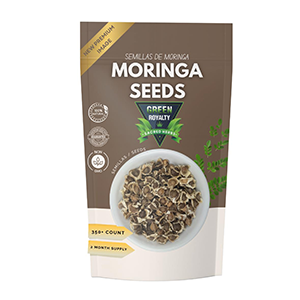
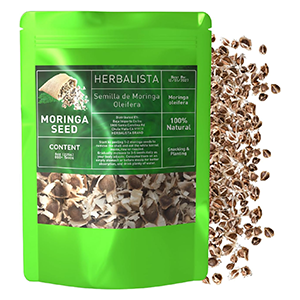
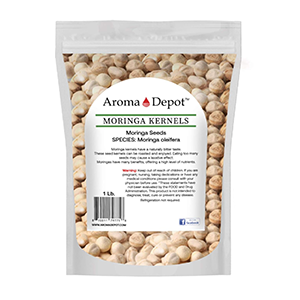
Moringa seeds can be purchased online in bulk quantities. Currently, seeds are limited to only a few suppliers. Organic moringa seeds are available, but non-organic is a second-best option, as the tree is not known to be a highly sprayed plant.
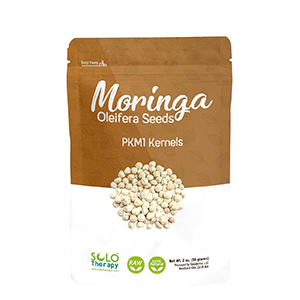
The non-GMO PKM1 premium quality is a strain of moringa seed that is favored for its high germination rate and enhanced nutrient content. They come unshelled or shelled for greater convenience.
Plant Your Own Moringa
Most all moringa seeds can be planted to grow another moringa tree if you happen to live in conducive climate zones.
Besides subtropical and tropical locations, moringa trees also thrive in arid desert-like regions of the world.
We've seen them many times as a common landscape ornamental in the Southwestern U.S.
Precautions:
Moringa seed should be used in small amounts for medicinal use only and not used when pregnant, nursing or trying to conceive. Overconsumption may lead to digestive issues such as bloating, upset stomach and/or diarrhea. Consult your health professional prior to use if you are taking any medications or have a serious health condition.

Shop Related Products (About Affiliates & Amazon Associate Paid Links)
Affiliate Disclaimer: This section contains affiliate product links. If you make a purchase through our recommended links, we receive a small commission at no additional cost to you. Thanks for the support.
Other Related Pages







As an Amazon Associate we earn from qualifying purchases at no added cost to you.