- Home
- Nuts and Seeds
- Fun Facts About Hazelnuts
10 Fun Facts About Hazelnuts and Nutritional Properties
What are Hazelnuts? | Source of Hazelnuts | Hazelnuts Vs. Filberts | Taste and Texture | Culinary Uses | Nutrition | Dehydrated Option | Nutritional Comparison | Production | Ancient Food | Precautions
1) What are Hazelnuts?
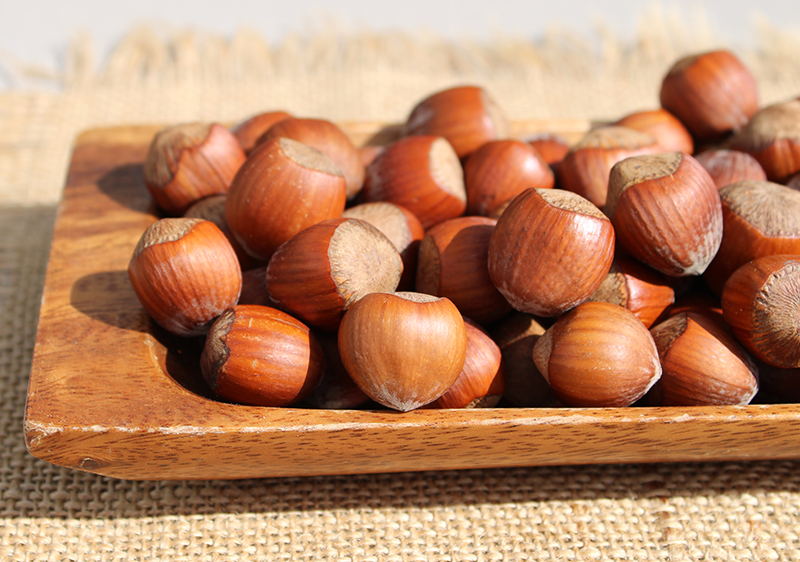
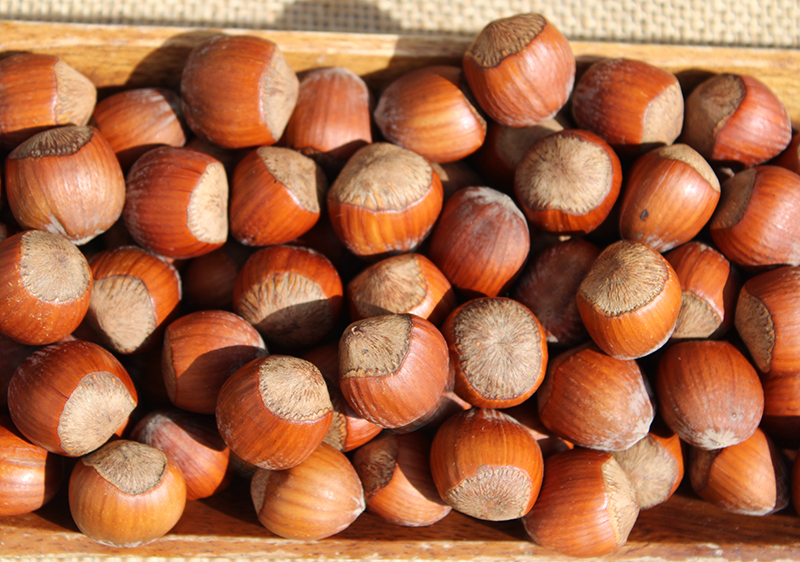
Hazelnuts are those little nuts that look very similar to acorns when in their rounded shells.
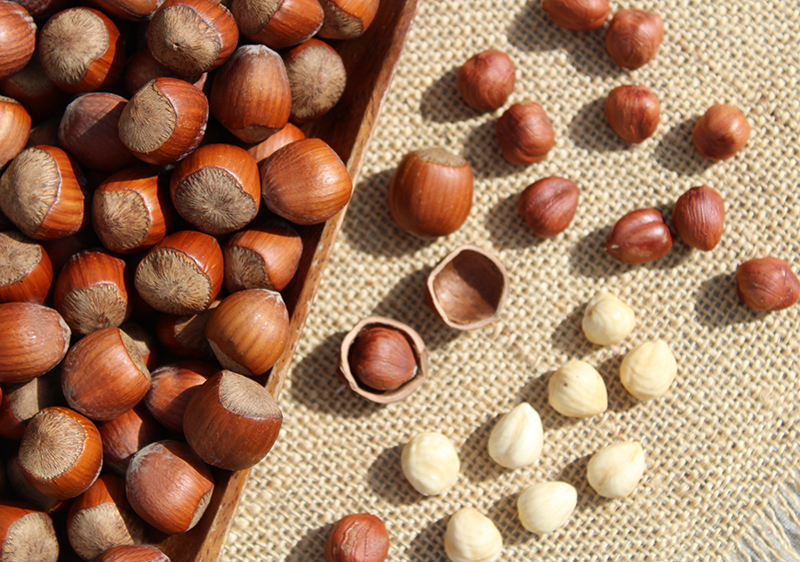
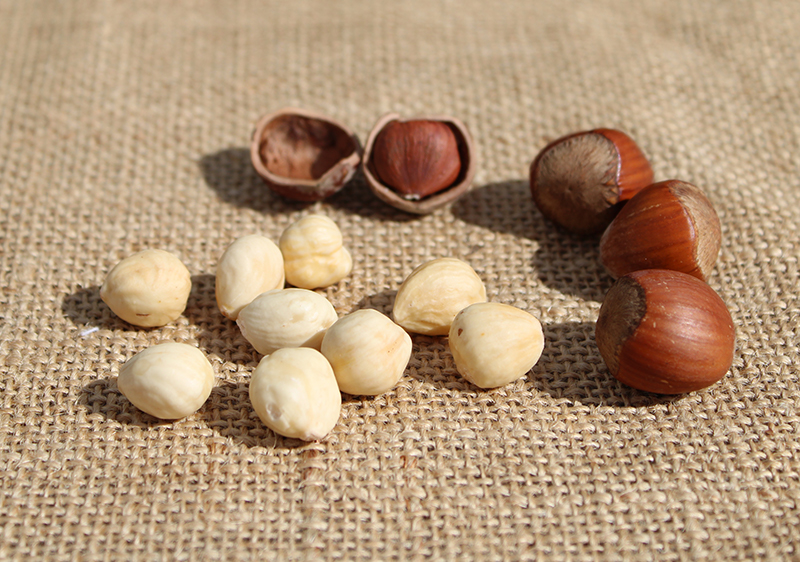
When this shell is cracked open, the inner kernel has a thin brown skin which when peeled, reveals a cream-colored nut.
All hazelnuts have a small hollow center that is exposed when sliced in half.

2) Source of Hazelnuts
Table of Contents
What are Hazelnuts? | Source of Hazelnuts | Hazelnuts Vs. Filberts | Taste and Texture | Culinary Uses | Nutrition | Dehydrated Option | Nutritional Comparison | Production | Ancient Food | Precautions
Hazelnuts come from small Hazel trees in the birch family and are native to woodlands, shrubs and hedgerows in regions of Europe and Western Asia.
The common hazel is the Corylus avellana or "European Hazelnut", indigenous to many areas of England, Scotland and Ireland as well as some Mediterranean countries, especially Italy and Greece.
Its natural habitat also extends across Scandinavia, northwestern Iran, Turkey and other countries of the Middle East.
3) Hazelnuts Vs. Filberts
The terms "hazelnuts" and "filberts" are often used interchangeably, especially in Europe and the United States, but hey typically come from the same nut species Corylus avellana. They are also called "cobnuts" in the U.K.
However, occasionally the term "filbert" can refer to the species Corylus maxima. This is a nut with a slightly more elongated shape but looks very similar to the common hazelnut in taste and texture.
The word "filbert" was adopted from the European celebration called St. Philibert's Feast Day, which coincides with the nut harvest time in late August.
4) Taste and Texture
Hazelnuts have a very distinct taste and texture, which intensifies in complexity when slightly roasted.
The compound known as FILBERTONE gives hazelnuts their dominant aroma and taste.
Raw nuts have a subtly sweet and somewhat earthy, bitter flavor profile.
Roasted nuts on the other hand are often described as have coffee and/or cocoa undertones and develop a prominent caramel-like flavor.
Because of their high oil content, they also have a rich buttery taste. However, in our opinion, their soft chewier texture makes them less palatable as a nut you would snack on by the handful.
5) Culinary Uses
Hazelnuts are a highly utilized ingredient in numerous cultural desserts around the world.
By far the most popular for culinary use is the roasted variety because it adds a deep flavor to any dish, both savory and sweet.
They are very common in baked goods like cakes, pastries and cookies as well as confections like praline, nut brittle, caramel and truffles.
Hazelnuts are often paired with coffee and chocolate in many sweet treats and also featured with cocoa in the well-known Italian spread called Nutella.
Likewise, this nut variety is a customary favorite in the Italian hazelnut gelato ice cream.
6) Nutritional Properties
So, what are some of the nutritional properties of hazelnuts? Well, that depends on exactly how you eat them.
While most "raw hazelnuts" are steam flash pasteurized (or blanched) here in the U.S., roasting can also reduce some of their natural antioxidant content.
Not only due to high-temperature heating, but also because the skin of the nut is often removed during this process.
Hazelnut skins have the highest concentration of nutrients like flavonoids and phenolic compounds such as proanthocyanidins, gallic acid and caffeic acid.
For greater nutritional benefits, we recommend purchasing in-shell hazelnuts and cracking them as needed for finest quality and freshness.
Hazelnuts are also high in VITAMIN E, which can degrade with exposure to heat.
If you intend to roast them, it is best to use low-medium temp roasting methods usually between 248-320°F (120–160°C) for 10 minutes. This can help to enhance the flavor of hazelnuts while preserving some of the nutrient quality contained within them.
7) Dehydrated Hazelnuts Option
Another option for the supreme health enthusiast would be to purchase organic whole hazelnuts with the skin and process them yourself using a dehydrator.
This requires soaking the whole hazelnuts in water for about 8 hours, then straining and coating with desired sweeteners or sea salt. When you dehydrate them overnight on medium temperature setting, they will develop a crunchier texture and enhance flavor.
Again, most nuts these days are not considered "raw" because they are required by law to be flash steam pasteurized in some countries. The term raw simply indicates they haven't been pre-roasted.
8) Hazelnut Nutrition Comparison
Hazelnuts are a fatty nut variety high in VITAMIN E content compared to other nuts and seeds. While sunflower seeds are the highest source, hazelnuts are third after almonds, with about 4.2 milligrams Vitamin E (21% the DV) for one ounce of hazelnuts.
They are likewise second on the list of nuts and seeds, after macadamia, for their heart-healthy MONOUNSATURATED FAT at approximately 12.8 grams per one ounce (28g) serving.
In regard to vitamins and minerals, the hazelnut is on the higher range by comparison for manganese, copper, vitamin B6, folate and iron.
9) Worldwide Hazelnut Production
To date, the largest world producer for hazelnuts is Turkey, dominating between 60-70% of the global supply.
Next is Italy and then the United States. The state of Oregon is a major growing region for hazelnuts making up 95% of all domestic U.S. production, most all sourced from hazel trees thriving in the Willamette Valley area.
10) Ancient Historical Food Source
Hazelnuts have been consumed for many thousands of years by humans. Evidence of historical hazelnut processing sites exists on the Isle of Man and in Surrey, England.
In the mid-90s, one of the largest Mesolithic hazelnut shell waste pits was found on the island of Colonsay in Scotland, dating back over 8,000 years ago. This, along with other smaller processing sites on the island suggest it was a main food source for the local inhabitants.
Precautions:
Hazelnuts should, of course, be avoided by those who have allergic reactions after consuming them. Consult your nutritionist or health care provider before adding hazelnuts to your diet if you are pregnant, nursing, taking prescribed medications or have a serious medical condition.
Shop Related Products (About Affiliates & Amazon Associate Paid Links)
Affiliate Disclaimer: This section contains affiliate product links. If you make a purchase through our recommended links, we receive a small commission at no additional cost to you. Thanks for the support.



Other Related Pages

As an Amazon Associate we earn from qualifying purchases at no added cost to you.