- Home
- Super Fruits
- Benefits of Eating Papaya
Benefits of Eating Papaya and the Papain Enzyme
Protein Digestion | Anti-Inflammatory | Heart Health | Eyes and Skin | Types of Papaya | How to Cut Papaya | Papaya Leaves and Seeds | Precautions | Shop
1) Natural Digestive Aid
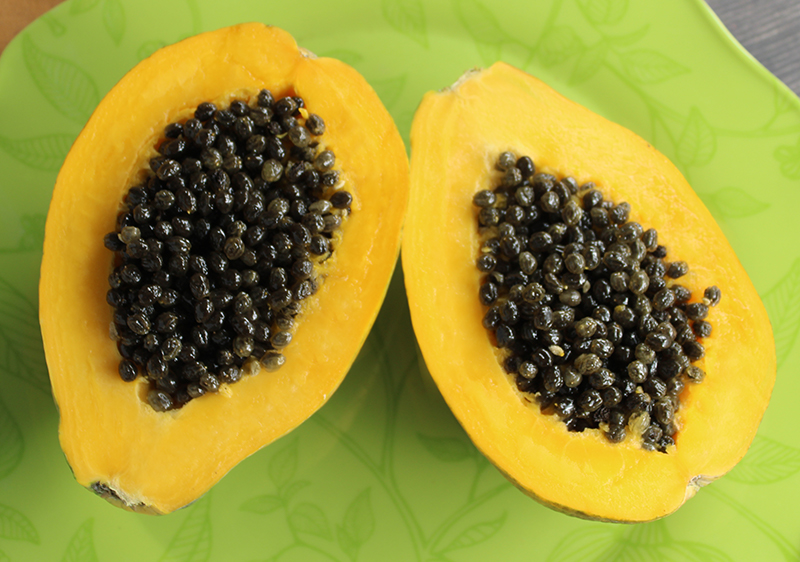
The benefits of eating papaya fruit first thing in the morning or between meals can be a great natural digestive aid. This is because papaya contains the enzyme known as PAPAIN.
Papain is a proteolytic or protease enzyme that helps us break down proteins into smaller polypeptides or amino acids that the body can more easily utilize.
This is similar to other protein-digesting fruit enzymes like the bromelain in pineapple and the actinidin in kiwi. Adding papaya to this fruit basket might be a good idea if you tend to consume a lot of heavy protein-rich meals.
The papain enzyme is in fact extracted from the latex of unripe papaya and is commercially available in powder form to aid digestive processes. It is commonly found on the list of ingredients in most digestive enzyme supplements.

Table of Contents
Protein Digestion | Anti-Inflammatory | Heart Health | Eyes and Skin | Types of Papaya | How to Cut Papaya | Papaya Leaves and Seeds | Precautions | Shop
While papain is significantly higher in unripe green papaya, ripe fruits also contain good amounts and are much more palatable.
If you happen to enjoy creating cultural cuisine in the kitchen, there is of course the option of making green papaya salad to get more papain in your diet. This is a spicy shredded side salad often prepared in Laos and Thailand.
Papaya fruit is also a good source of FIBER which helps promote bowel regularity and offers a prebiotic influence to beneficial gut microbiota.
Papaya pulp is likewise about 88% WATER, which helps to hydrate and soothe gastrointestinal functions.
In Ayurveda and Traditional Chinese Herbalism, eating papaya is believed to support the SPLEEN organ by improving digestive fire (agni) and enhancing energy levels.
2) Alkalizing Dietary Anti-Inflammatory
Another one of the benefits of eating papaya is that it has an alkalizing effect on the body. This can assist in neutralizing acidic conditions and inflammation that often contributes to related health issues.
Some of the fruit's anti-inflammatory properties not only come from its papain enzyme but another cysteine protease called CHYMOPAPAIN, both of which are helpful in digesting inflammatory proteins.
In some research, the fruit, and especially the leaves of the papaya tree (Carica papaya), have been considered useful dietary adjuncts for joint pain and arthritis.
Again, this anti-inflammatory and analgesic influence is due mostly to the PAPAIN compound. Therefore, papaya leaf extracts are commonly used for such purposes, but eating fresh papaya can also be a helpful nutritional protocol.
Moreover, the fruit contains ANTIOXIDANTS in the form of phenolic acids (ferulic, caffeic, p-coumaric, gallic acids) and flavonoids (myricetin, quercetin, kaempferol, rutin, luteolin, apigenin). These compounds are absorbed in the small intestine and distributed to neutralize free radicals and subsequently help to inhibit inflammation in the body.
Papaya is also a source of other antioxidants like VITAMIN C and CAROTENOIDS which work to lower oxidative stress and reduce inflammatory markers.
According to nutritional data, one ripe papaya has approximately 200 milligrams VITAMIN C or 223% of the Daily Value, based on a 2,000 calorie adult diet.
3) Supports Heart Health
It goes without saying that consuming more fibrous fruit on a regular basis can be a good dietary practice for maintaining a healthy heart and assisting to reduce LDL or the "bad cholesterol ".
Papaya can be a nice option to add to the list because its also higher in the mineral POTASSIUM, which can help to improve blood flow, balance sodium levels and regulate blood pressure.
The antioxidant content in papayas also protects against the oxidation of cholesterol and the formation of plaque buildup in the arteries.
When consumed in moderation, it has a low-to-moderate glycemic index compared to other common fruits. This means it gradually increases blood sugar instead of spiking it, potentially making it a better choice for diabetics who also have an increased risk for cardiovascular issues.
In addition, the papain in papaya fruit and its leaf extracts, likewise help the body assimilate meat proteins, guarding against conditions like atherosclerosis.
According to nutritional data, one ripe papaya (330 grams) has approximately 122 micrograms of FOLATE or 31% of the Daily Value, based on a 2,000 calorie adult diet. Folate, an important B vitamin, helps to support heart health by regulating homocysteine levels.
4) Good for the Eyes and Skin
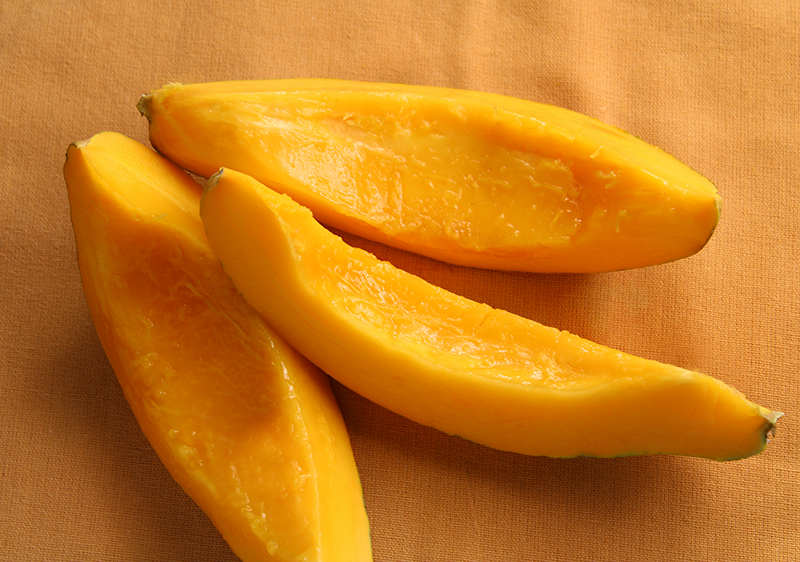
Papaya fruit is high in CAROTENOIDS and is what gives the flesh its orange-yellow color. This includes pigments like lycopene, cryptoxanthin, beta-carotene, as well as smaller amounts of lutein and zeaxanthin.
Along with Vitamin C, these are dietary nutrients known to promote healthy eyes and vision, potentially reducing the risk of cataracts and age-related macular degeneration.
Papaya and its papain extracts are commonly utilized in the beauty industry for their benefits to the skin. They are extensively used in face masks, soaps, cleansers and anti-aging serums.
When consumed, the fruit's higher folate content also provides nutrients for both healthy skin as well as hair.
How to Cut Papaya
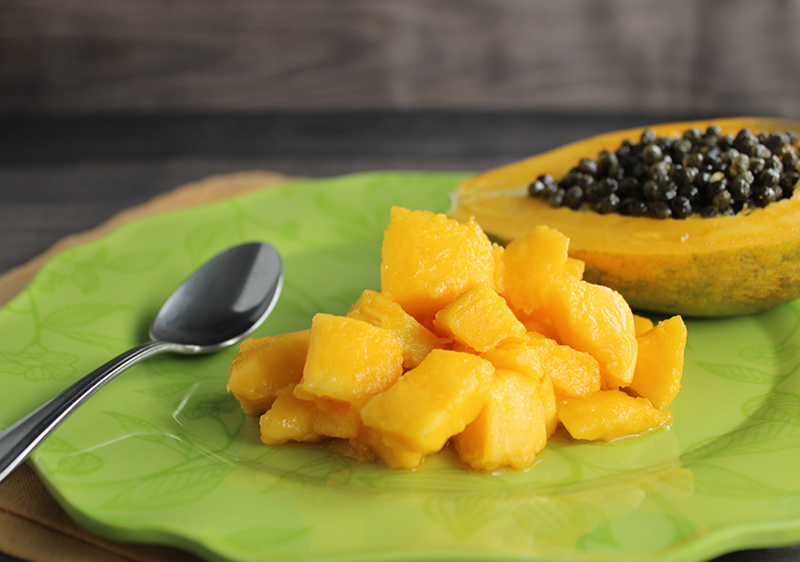
Papaya fruit can be cut in a few different ways. One is to simply slice it in half lengthwise, remove the seeds and scoop out the soft flesh with a spoon. This is our favorite way.
Next is to slice it into quarter sections and eat it like watermelon.
Another popular way to consume papaya is to score half a seeded fruit into cubes and scoop it out from the skin. This is a great method if you want to freeze it for later use.
Types of Papaya
While papaya is native to Mexico and Central America, there are many different cultivars grown in tropical climate zones worldwide.
Currently, India, the Dominican Republic, Mexico, Brazil and Indonesia are the leading papaya-producing countries.
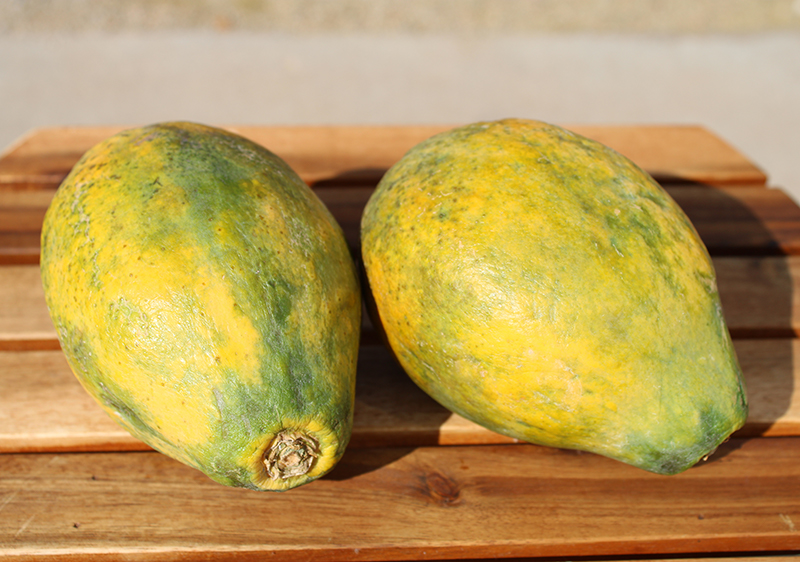
Each type of papaya can vary in size, level of sweetness and color range (from red-orange to yellow).
Typically, here in the U.S., they are imported from Hawaii or Mexico. While it is hard to find Organically Certified papaya, non-GMO selections are available.
This is important as some Hawaiian cultivars like "Rainbow" and "SunUp" are genetically modified to prevent the papaya ringspot virus.
Most papayas produced in Mexico are typically non-GMO. Even the larger Maradol papaya is considered a non-GMO heirloom species. Unfortunately, the imported Maradol's we have come across aren't super sweet and have a bland flavor.
About Papaya Leaves and Seeds
The papaya tree is a highly versatile plant when it comes to therapeutic applications.
In many regions in which it grows, both the leaves and seeds are utilized along with the ripe and unripe fruit itself.
Young leaves can be steamed like spinach and mature ones can be used to make traditional medicines due to its higher papain content.
You may be thinking, are papaya seeds edible? Yes, they are edible in small amounts, usually one or two seeds. Not everyone enjoys them however, as they can have a strong peppery flavor and rough texture.
There is some evidence that papaya seeds may be useful against intestinal parasites, which has been one of their common folk uses.
Precautions:
Consult your healthcare professional before adding papaya to your diet, especially if you have latex-fruit allergies, are pregnant, nursing, taking any medications or if you have a serious medical illness.

Shop Related Products (About Affiliates & Amazon Associate Paid Links)
Affiliate Disclaimer: This section contains affiliate product links. If you make a purchase through our recommended links, we receive a small commission at no additional cost to you. Thanks for the support.


Other Related Pages






As an Amazon Associate we earn from qualifying purchases at no added cost to you.